ACMA promotes air cleaners as answer to smoking issues
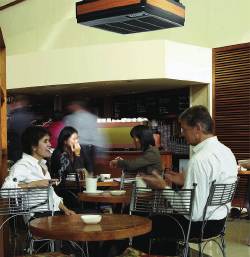
Air cleaners, such as this model from Honeywell, are being presented by the Air Cleaner Manufacturers Association to the Government as the key to permitting smoking in public places without inconvenience to non-smokers.
Support for the Government’s efforts to reduce smoking has been declared by the Air Cleaner Manufacturers Association, which also says that it does not believe a total smoking ban is workable. In a report submitted to the team responsible for smoking legislation at the Department of Health, ACMA points out that air cleaning provides a ‘middle way’ that provides comfort and clean air for both smokers and non-smokers. A spokesman for ACMA member Honeywell says, ‘The industry recognises that a total ban on smoking is unlikely, as is the status quo, so regulation is likely. Air cleaners can minimise the practical difficulties and allow smokers and non-smokers the opportunity to enjoy clean. As we state in the ACMA dossier, an air cleaner costs only about £1 a day to run.’ ACMA proposes that premises be exempted from any ban on smoking in enclosed public places and workplaces if the whole roomer is treated by air cleaners or there are self-contained smoking booths. ACMA stresses that air cleaners remove pollutants — unlike ventilation, which displaces them elsewhere. The report also explains that normal air-conditioning filters do not remove the very small particles found in smoke and that recycled air from an air-conditioning system can spread smoke and odours throughout the building. Another benefit of air cleaners is the volume of air required to ventilate a space can be reduced, with consequent energy savings. www.air-cleaner.org.uk
Related links: