


Phase-change system performs well in university
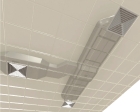
Monodraught Cool-phase low-energy cooling and ventilation systems have replaced the aging air-conditioning system in a computer room at Anglia Ruskin University in Cambridge. The room is in the Bryant Building and is used by the Faculty of Science & Technology.
In an effort to reduce energy consumption, the university is keen to explore low-energy alternatives to conventional air conditioning. The two Cool-phase units replaced an air-conditioning system that provided comfort cooling but not ventilation.
The Cool-phase systems provide intelligently controlled ventilation with cooling through the use of a phase-change material in thermal-battery modules. This installation can store 16 kWh of ‘coolth’.
This trial installation has been extensively monitored and could lead to other installations across the Cambridge and Peterborough campuses.
Each Cool-phase system continually monitors and records temperature, CO2 concentration and energy use. Data was collected over a period that included the beginning of February to the end of August.
While internal temperatures exceeded 25, 28 and 32°C during the period, the Cool-phase systems maintained a temperature of less than 25°C within the room for 97% of the occupied hours. At no point did the temperature exceed 28 or 32°C — a performance that exceeds target overheating criteria stipulated by CIBSE Guide A and BB101. The CO2 level was consistently maintained below 1500 ppm.
The total energy consumption of the units was just under 200 kWh, amounting to 70 p a week for electricity at 11 p/kWh.
Commenting on the choice of Cool-phase for the project, Andy Lefley, assistant director of building services, estates & facilities at Anglia Ruskin, said, ‘I am very excited by this technology and by the opportunity to improve student comfort without increasing the energy burden to Anglia Ruskin University.
‘The results achieved show that the solution has complied with the overheating and air-quality criteria, keeping temperatures and CO2 concentrations within acceptable levels. This has been achieved with very low energy usage and equally low running and maintenance costs.’