

Electrolytic scale control solves limescale issues
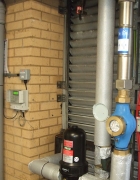
A large manufacturing and R&D site in the south east of England has tackled the problem of limescale deposition in calorifiers and on hot- and cold-water outlets using Sentinel Commercial’s Kalguard electrolytic device. The benefits include greatly improved energy efficiency, longer life of components and reduced cleaning requirements.
The plant had previously relied on a coil system around the pipe to condition the water, which had very little effect. The manager of the plant’s water team said, ‘The old calorifiers are due to be replaced. One has just failed, and looking inside I have never seen such a scaled-up calorifier in my life.’
After consulting with Sentinel, a 54 mm Kalguard system comprising a zinc anode, water meter, filter and controller was selected to deal with the issues of water hardness.
Kalguard permanently conditions water by dosing it with a very low level of stable zinc via an electrolytic process that uses a zinc anode and copper cathode. Calcium carbonate is then deposited as soft aragonite that does not form scale rather than as a hard deposit.
Independent tests at Cranfield University have proved Kalguard’s ability to reduce limescale dramatically. The treatment does not decay on standing or agitation, so it can be installed on a rising main before water-storage tanks or booster sets.
Since the Kalguard unit was installed, all sanitary ware has been free of limescale. Shower heads have also been exceptionally clean.’