


Carlo Gavazzi on the pulse
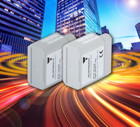
Carlo Gavazzi has launched the SHJWIN, a new wireless digital input module that can also be used to count pulses from energy meters (gas, water, electric) and other sources. The module has 4 inputs that can be configured individually either as digital contact inputs or pulse count inputs, from class B SO outputs usually found on energy meters.
Fast and easy to install, its compact design makes it ideal for installation in a junction or wall box, or anywhere where space is restricted. The module boasts a wireless range to 700m in free air. Each module can also function as a repeater, extending the maximum free air range up to 2.1km.
All count values are stored locally in a non-volatile memory within the module itself, pulses can still be recorded even if the wireless path is interrupted. The count values are transferred to the main controller when wireless coverage is restored. The internal count buffer can store values up to 99999999 and is fully scalable, and has an automatic roll-over function when the maximum count value is reached.
The SHJWIN is used as part of a Dupline system. Dupline bus wiring topology is completely free which means the installation can be carried out using the lowest-cost route rather than multidropping from sensor to sensor. Either way, this solution is easier and cheaper than traditional parallel wiring, which also reduces the number of DDC’s and sub-panels required and provides higher flexibility for last minute changes and enhancements.