


In the house
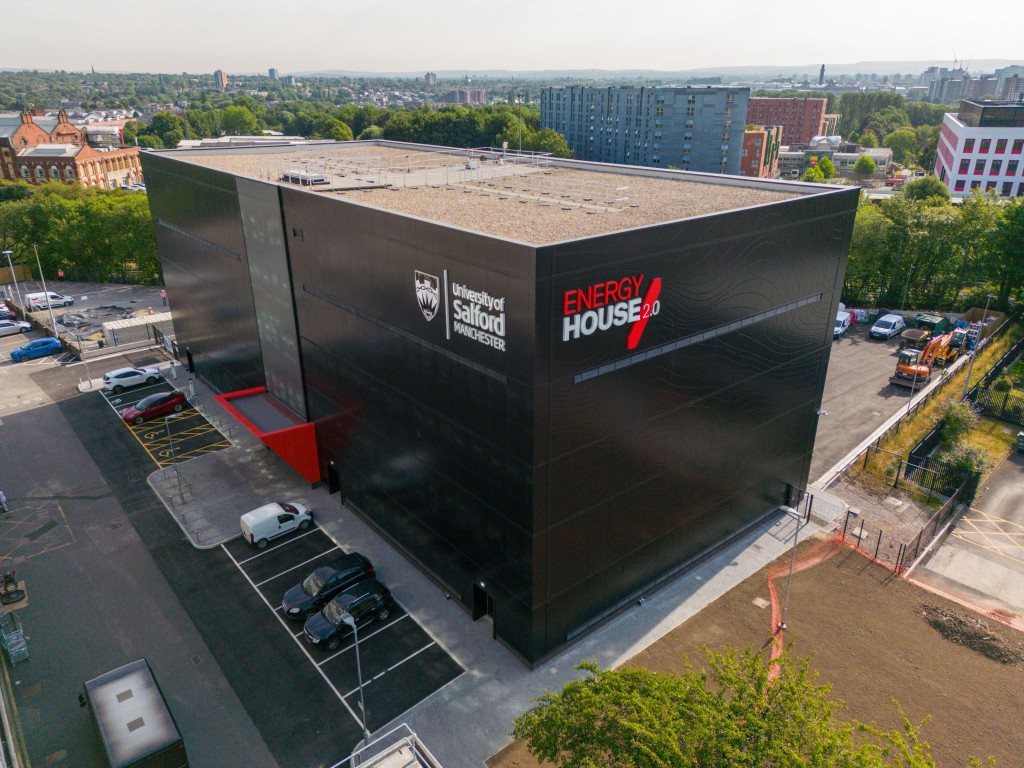
Loxone’s building management system (BMS) has produced impressive results at the at the University of Salford’s Energy House 2.0 research facility, in Manchester, delivering superior precision, adaptability and energy efficiency.
Tested alongside other heating and control systems, Loxone’s system excelled in maintaining comfortable indoor temperatures, achieving 21°C in typical winter conditions and 20°C in extreme cold (-5°C) – all while optimising energy use and reducing waste.
Energy House 2.0 has two climatic chambers and is one of the world’s most advanced building performance test facilities. It provides a rigorous testing environment. These chambers simulate typical UK winter temperatures (5°C) and severe cold spells (-5°C), allowing various construction solutions and building technologies to be tested for efficiency and resilience.
The university has been releasing its findings in various reports since the research began in January 2023, with the most recent report, ‘Energy House 2.0 Study on Future Homes Standard Heating Systems’, showing that Loxone’s BMS not only maintained the target indoor temperatures across different rooms and zones but did so with remarkable energy efficiency, distinguishing itself from other systems.